Underwater Photography Tips for the Beginner
2017-02-01 12:26:45
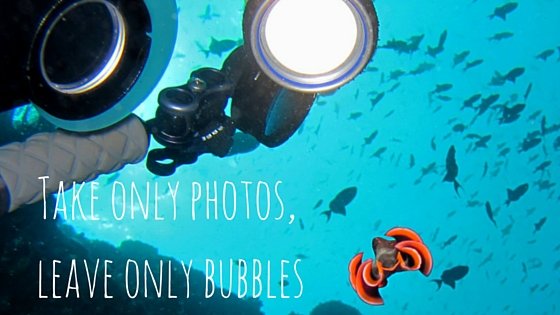
Take only photos!
The best underwater photography tip is: Take only photos, leave only bubbles.
But what about the rest?
If you are just starting out with
underwater photography, what next?
In recent years, underwater cameras and underwater housings for cameras have become a lot more affordable with increasing numbers of divers adding an underwater camera to their standard scuba diving kit.
How hard can it be? Hold the camera, point and shoot... simple.
Yes, it is simple to take photos but not so easy to
take GOOD underwater photos.
Here are some
beginner tips to get you started:
1.
Learn how your new underwater camera is working; not only the zooming, shooting and flash buttons but also take the time to learn more about white balance, shutter speed and focus, and how these things can affect the final photo.
2.
Get close to the subject you are photographing. This can prove tricky in the beginning because it relies on the skill of having good buoyancy while you dive. You can read more about why buoyancy is important and how to achieve
better buoyancy here in the first part of our buoyancy series.
Getting close is important because it increases the definition of the image and also improves the light and colours of your photo too. A common complaint of new underwater photographers is the dull blue-grey hue of their images but by removing the amount of water between the camera and the subject, you will get a clearer, sharper and more colourful image.
3.
Shoot from below. Too often new underwater photographers take photos from above with the bottom of the sea/corals as background to their subject, which can often lose the subject in the background. Instead, try to focus on the fish eyes and shoot from below the subject. A photo with part of the reef and then blue open water in the background makes for a much more eye-catching and attractive photograph.
4.
Use a strobe. If you can, use a strobe to assist with the lighting of your photograph. It can make a big difference. If you angle the light at 45 degrees to the subject, this is much better than using an internal camera flash that often adds to the back-scatter from particles in the water. Internal camera flashes should be prevented mostly because they are common to make your photos 'snowy' as the flash reflects off particles in the water. Using strobes with your underwater camera solves this problem by still providing the necessary light, but at an angle more favourable to reducing back-scatter.
5.
Respect the environment. As already said, the most important rule to follow for taking good (or bad) underwater photographs is to respect the environment. That means you must leave only bubbles and take only photos! It is far too easy when you are first starting with underwater photography, to lose concentration and forget about your surroundings. Watch where you are placing your fins, if you have to place them at all. You should not be crushing the reef - you should not even be touching it! Coral reefs are fragile ecosystems that demand our protection. Even what looks like a sandy patch can have living creatures camouflaged or buried in the sand so when you pick up your camera, don't forget all the other GOOD habits you have learned about scuba diving.
If you are struggling with your buoyancy when scuba diving, do not even consider adding a camera to the mix!
One step at a time; master your buoyancy, then you can master an underwater camera. The following phrase is not uncommon among the diving community:
If you want to turn a diver into a bad diver, then give him a camera!
The above tips will help but ultimately the best way to get introduced to underwater photography, to be safe while taking underwater photos, and to improve your underwater photography skills, is to take the
PADI Underwater Photography Specialty course. This course develops your camera skills, buoyancy control, photo editing and proper equipment maintenance. It is an invaluable course when you are just starting out on the road to taking underwater photos.
More information on PADI Digital Underwater Photography course
SUB AQUA DiveCenter offer the PADI Digital Underwater Photography specialty course at all dive centers in Maldives, Thailand, and partner dive centers around the world.